Building Our Own Runways — A Conversation with Sage Paul
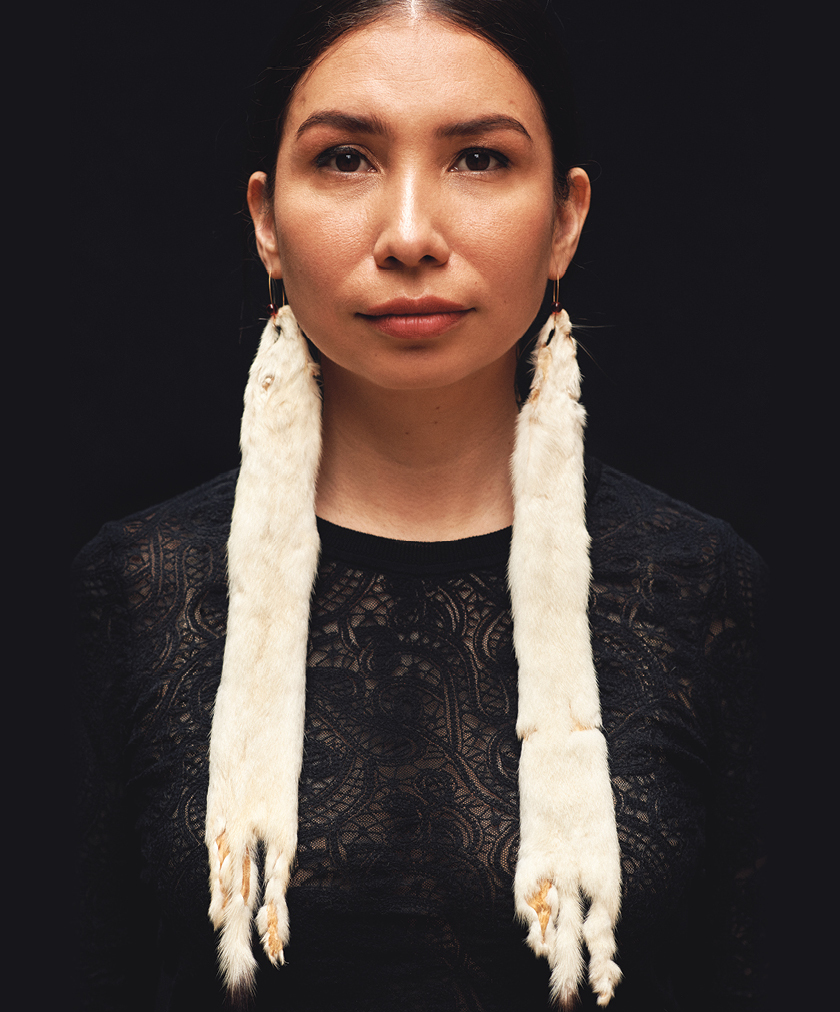
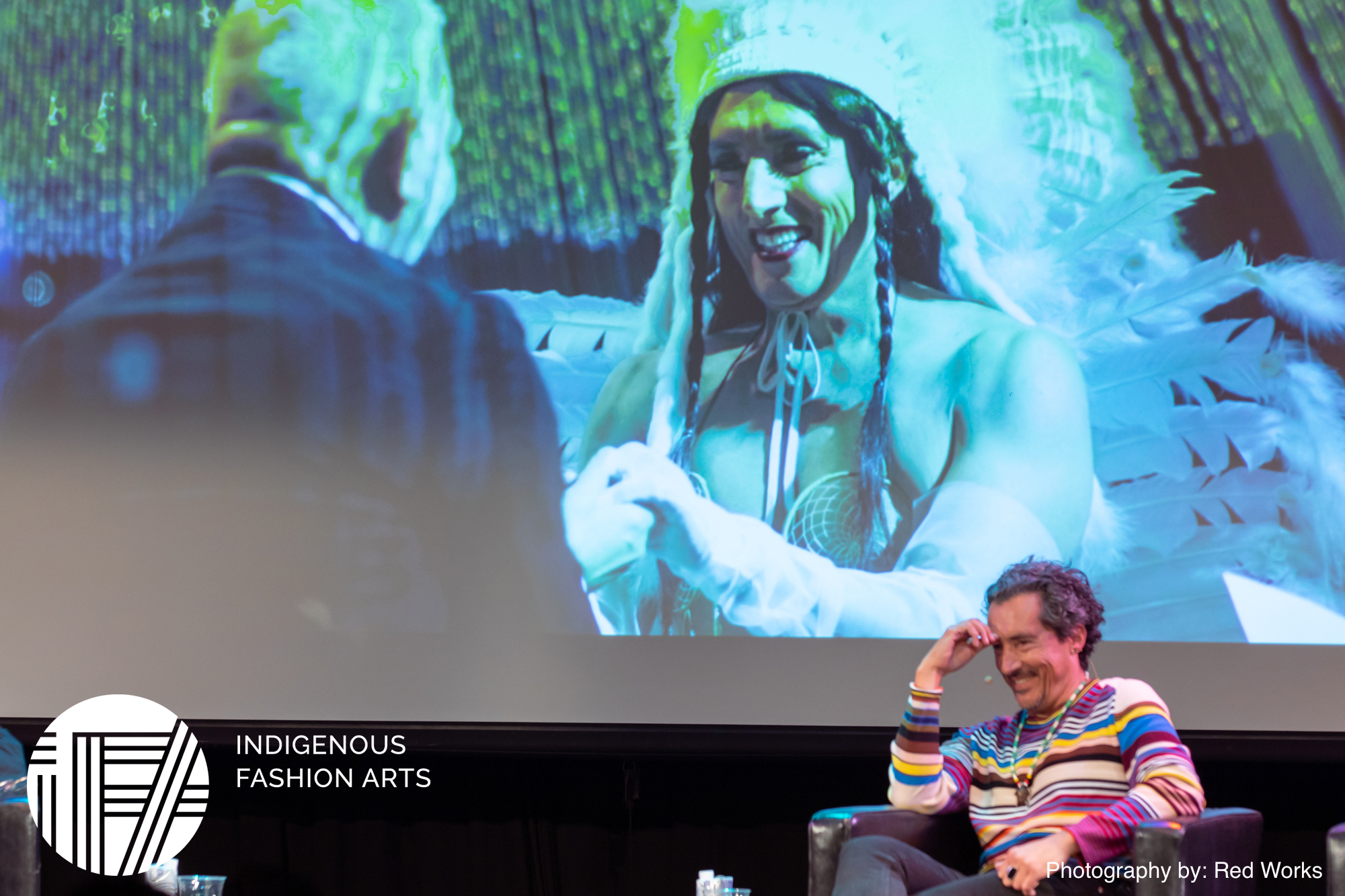
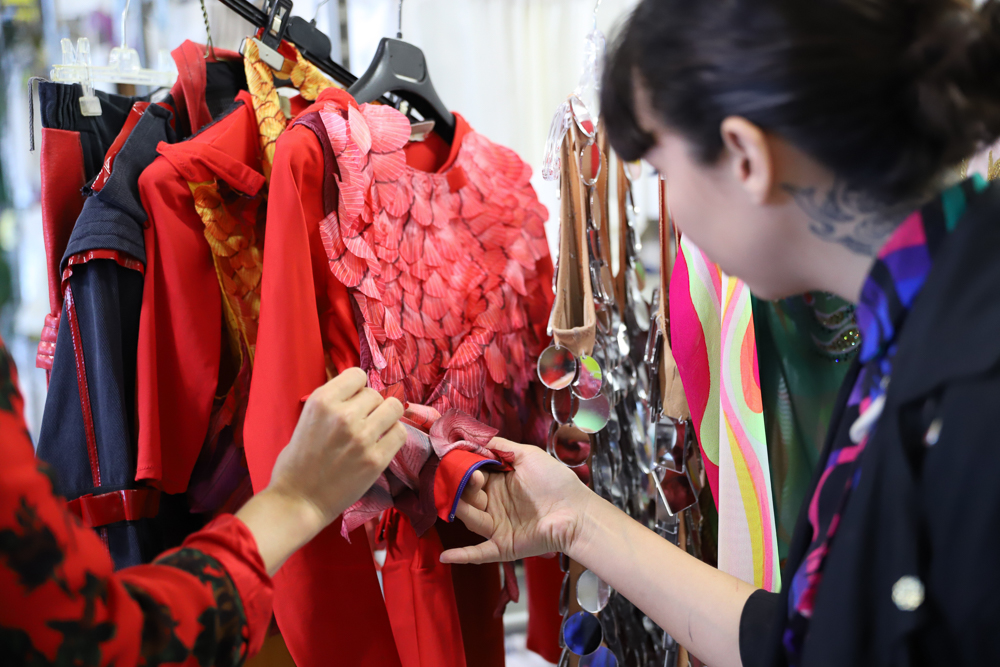
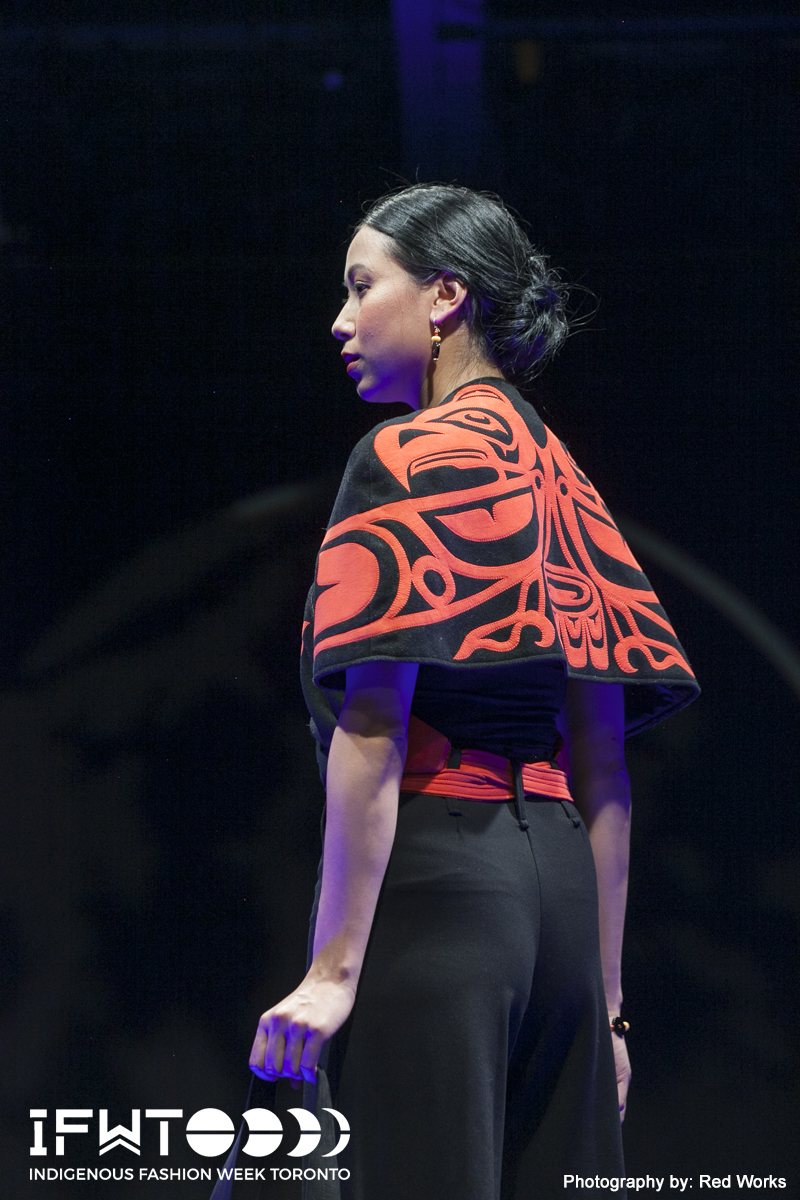
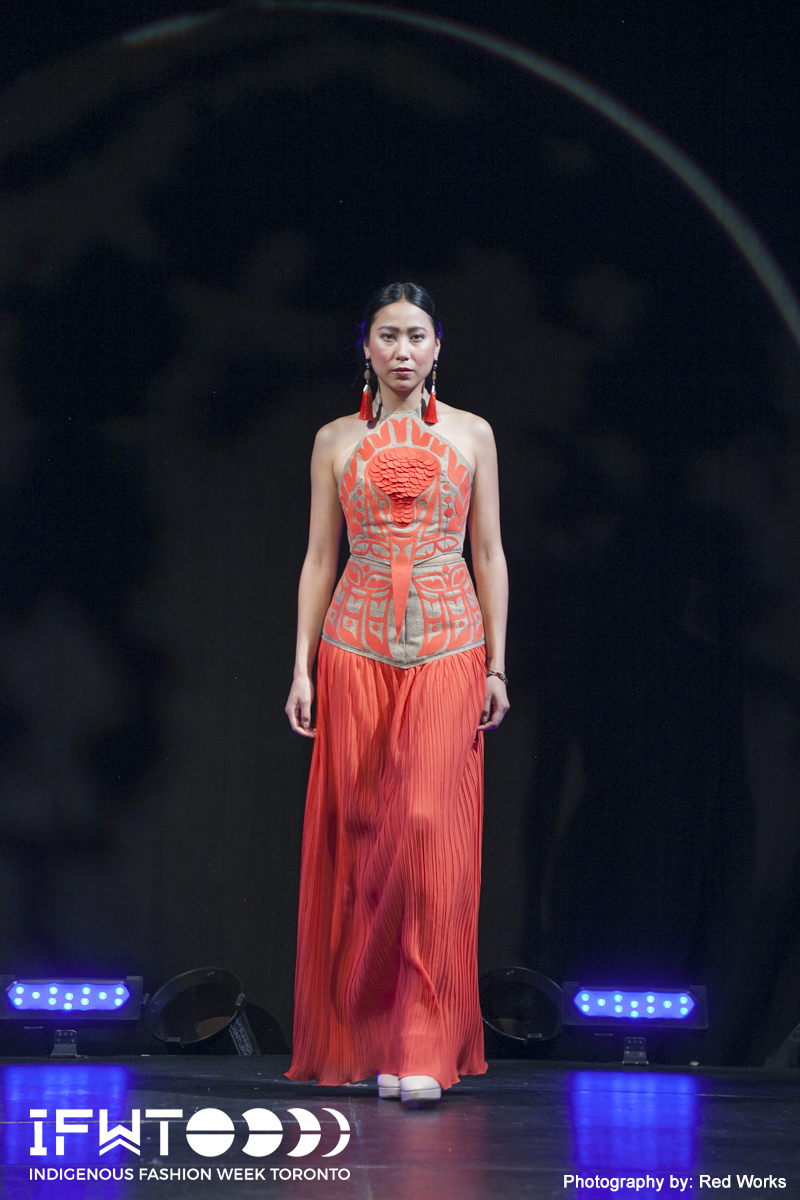
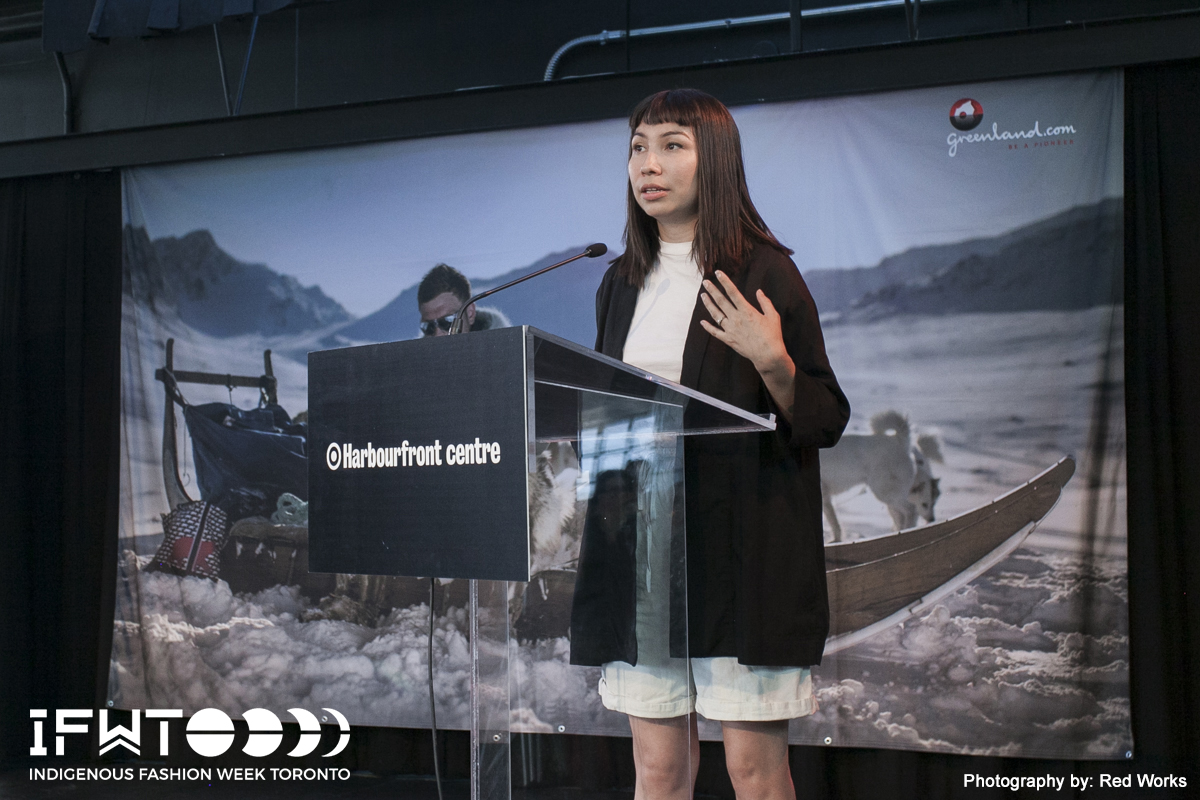
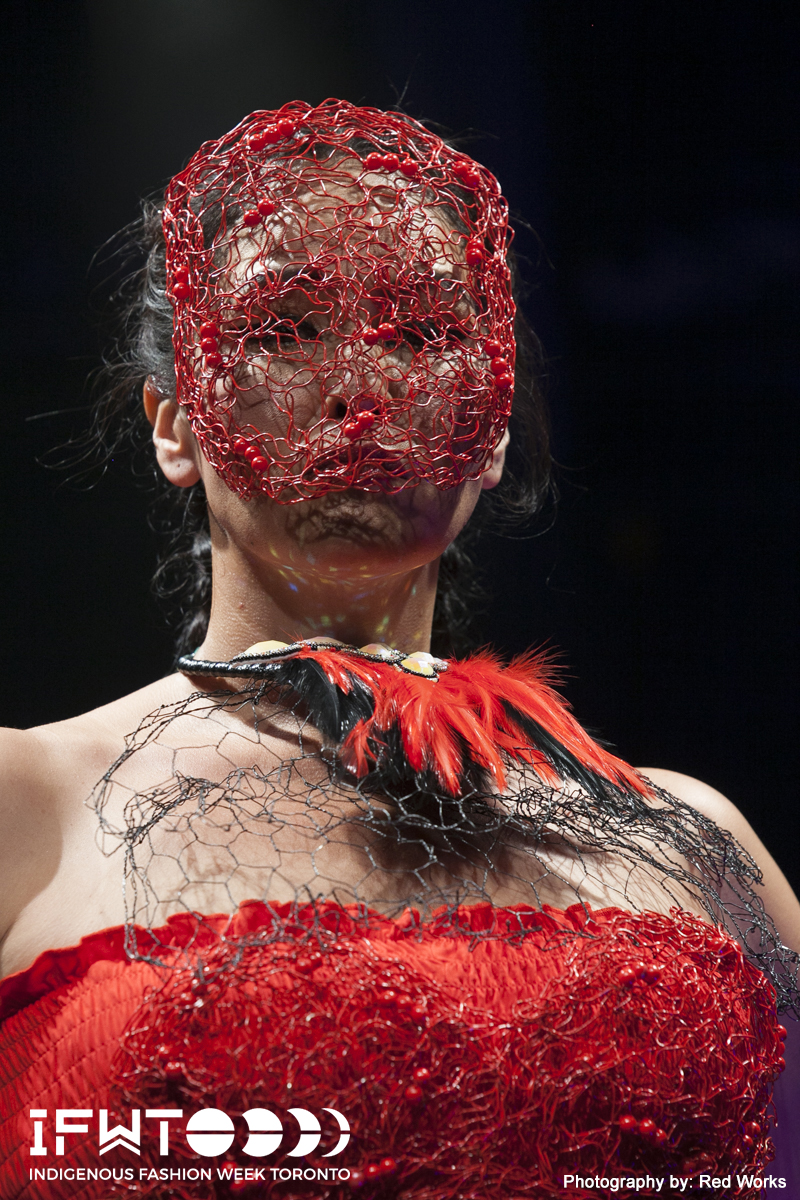
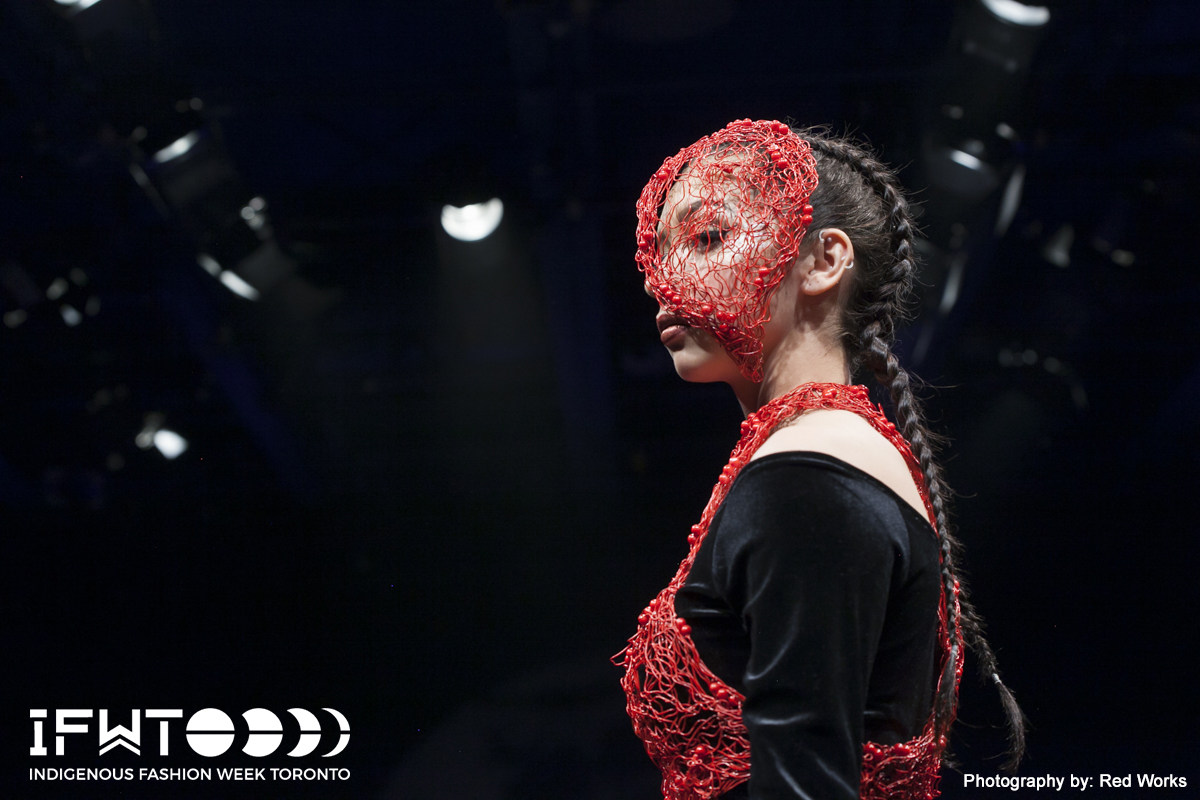
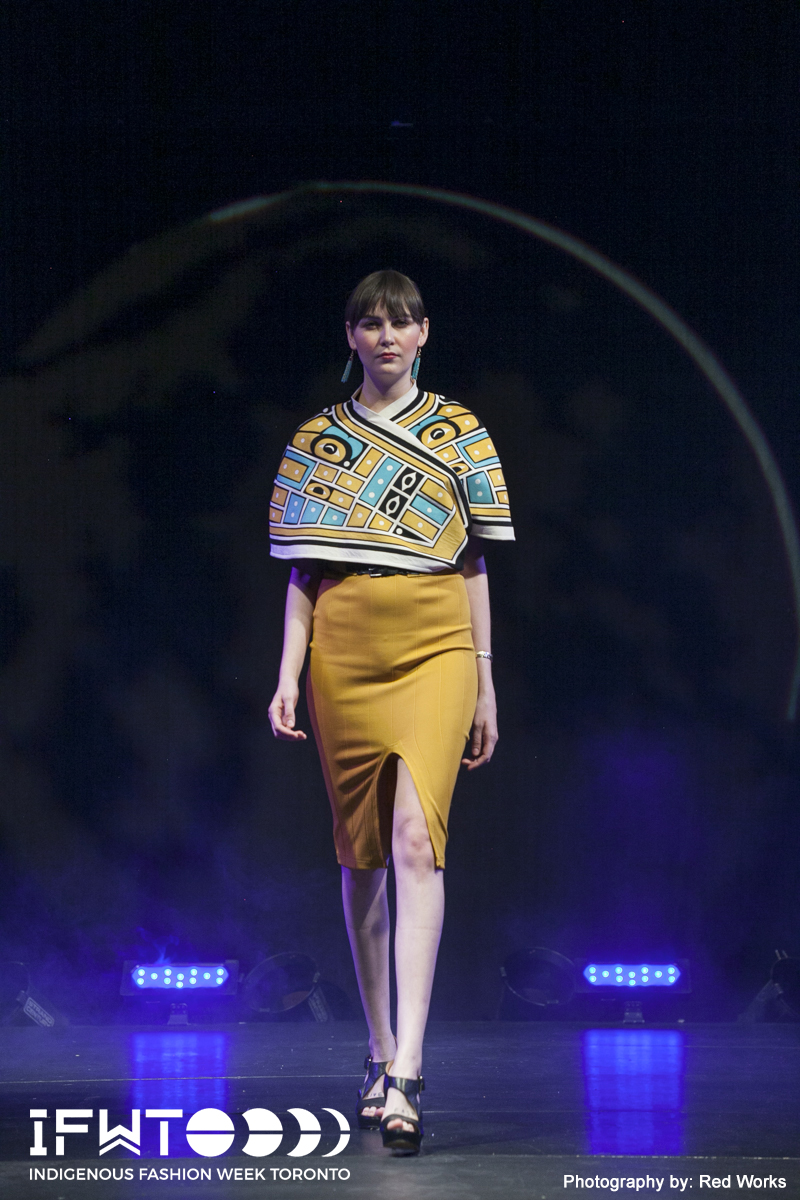
Sage Paul is a Denesuliné tskwe (woman) and member of English River First Nation, based in Toronto. Her work weaves together fashion, performance, Indigenous sovereignty, and storytelling. As the Executive and Artistic Director of Indigenous Fashion Arts (IFA), formerly Indigenous Fashion Week Toronto, Sage is redefining how Indigenous fashion is seen, supported, and celebrated.
Through her leadership, IFA has grown into a powerful biennial platform that brings together designers, curators, models, youth, and makers from across Turtle Island and beyond. And it’s not just a showcase; it’s a world-building project. It has become a place where Indigenous fashion is treated with the depth, seriousness, and joy it deserves – where performance, narrative, and community care all walk the runway.
When I caught up with Sage, she was already deep in planning for IFA 2026. The 2024 edition was a massive success, with over two dozen designers presenting shows that blurred the lines between theatre and fashion. But rather than rest on that momentum, Sage is already reimagining how the next cycle can serve artists and audiences in even more meaningful ways.
“We’re every two years, so the next one is in 2026,” she explained. “I’m in the middle of exploring how we evolve. We’ve built this scene within our own communities, and it’s amazing. Ten years ago, there were only a handful of people looking at fashion as a career or cultural direction. Now there’s so much happening. But with that growth, we have to ask: how are we serving our people?”
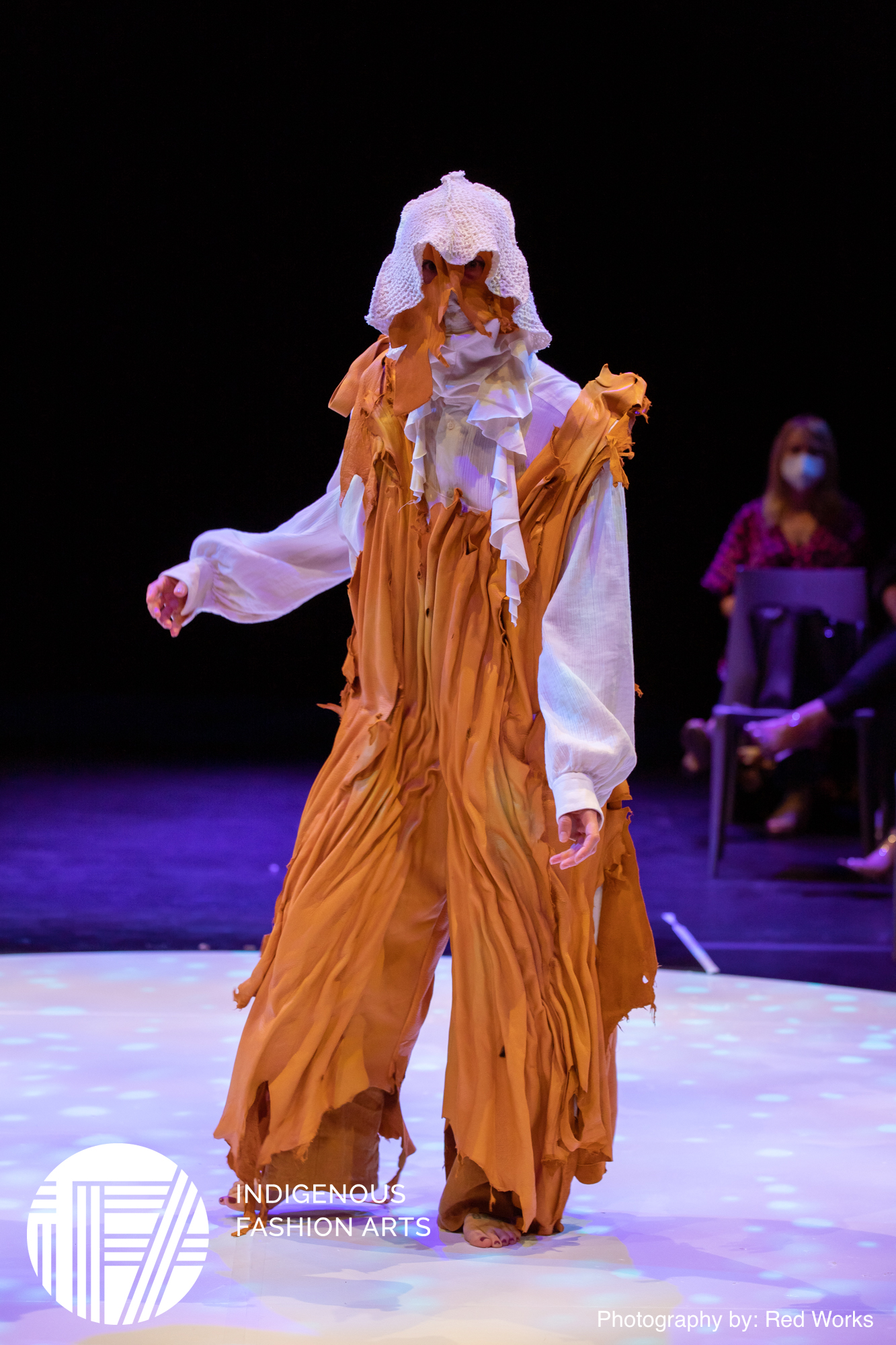
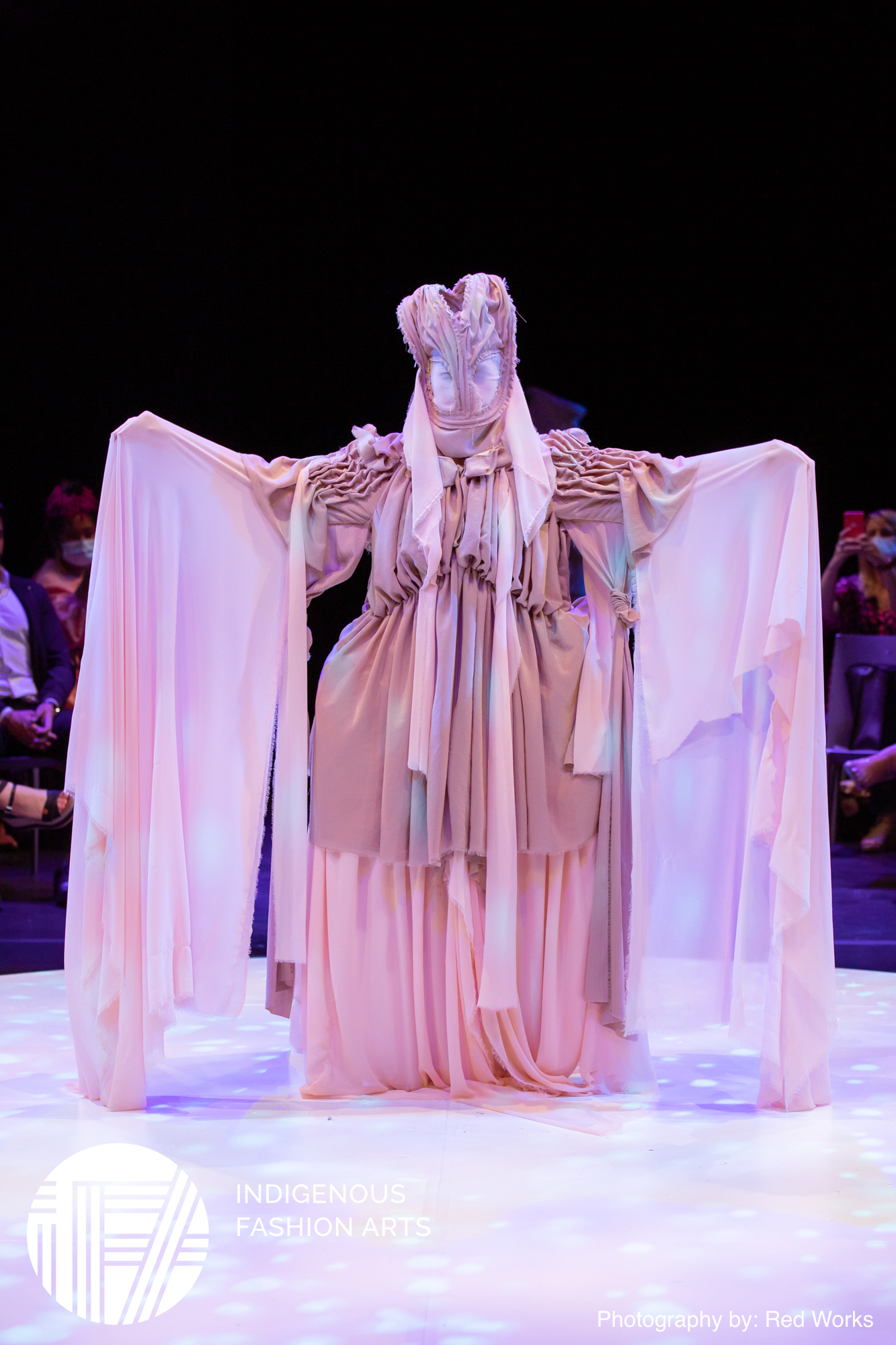
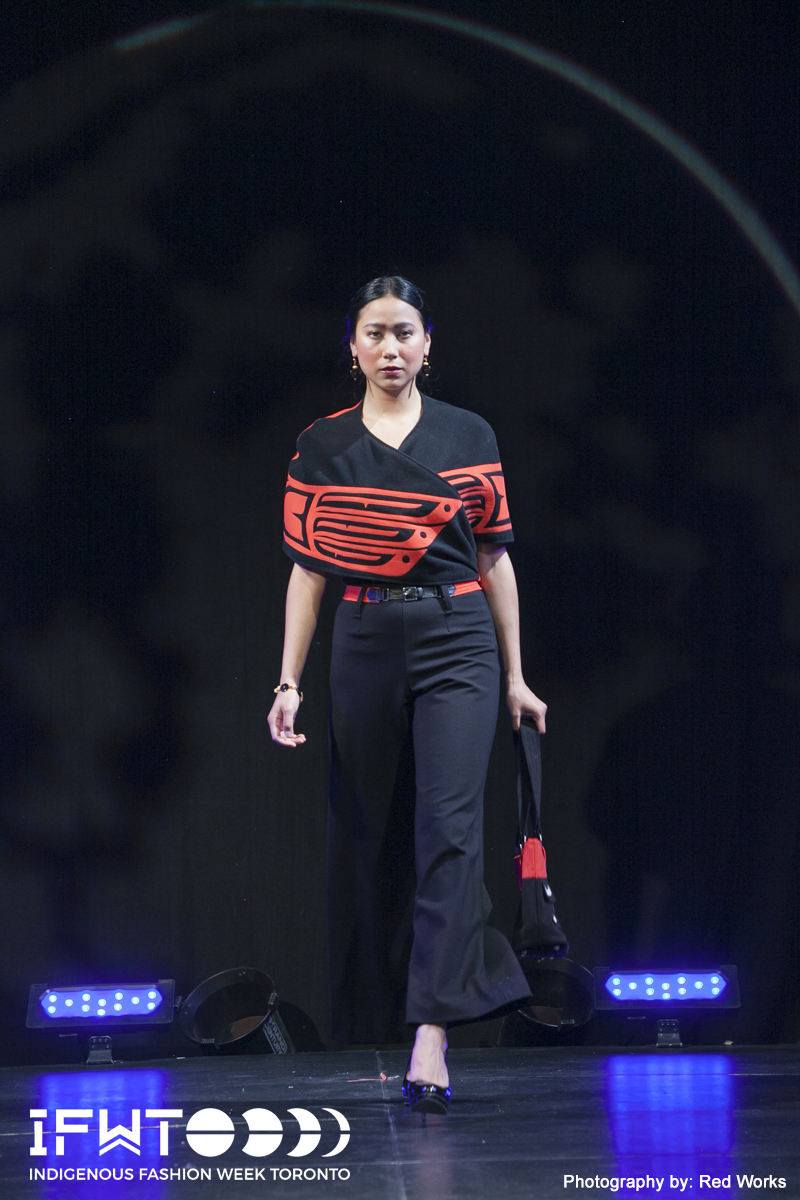
At IFA, one of the key differences from mainstream fashion weeks is the centrality of storytelling. These aren’t just runway shows. They’re performances. Last year, Sage worked with a choreographer and a theatre director to shape how garments moved and lived on the runway.
“We collect artist statements with the designer applications, and we curate based on how the narratives work together,” she said. “One show was about matriarchs — mothers who do everything to protect their families. Another in the same show focused on children. What emerged was a theme of radical caregiving. We had babies and toddlers modeling with their families. It was beautiful.”
I remember seeing those moments on Instagram: tiny moccasins, proud aunties, kids strutting beside their siblings. There was a vibrancy and sincerity that felt so distinct from the cold, editorial feel of many fashion weeks.
But curating 25 designers is no small feat. “We’re thinking about showing fewer designers next time, to allow for deeper collaboration with choreographers and for designers to build fuller collections,” she noted. “Right now, most are working in smaller capsules, which makes sense — traditional work takes time. None of us have the kind of backing the major fashion houses do.”
We talked about infrastructure, about how much could grow if Indigenous designers had the support systems they deserve. I floated the idea of an open atelier, which could include shared studio spaces with access to sewing machines, dye labs, or mentorship. Sage was thoughtful.
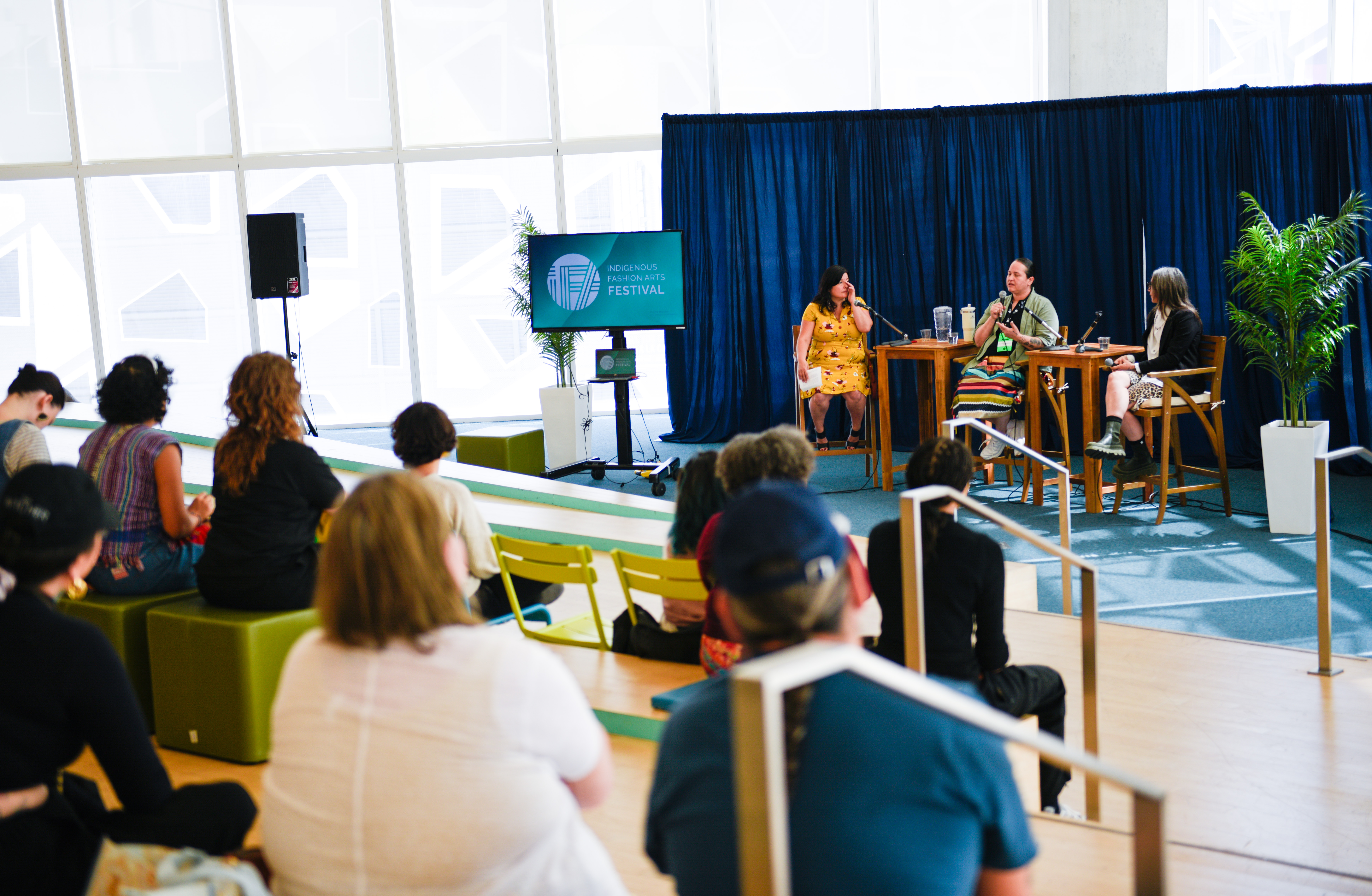
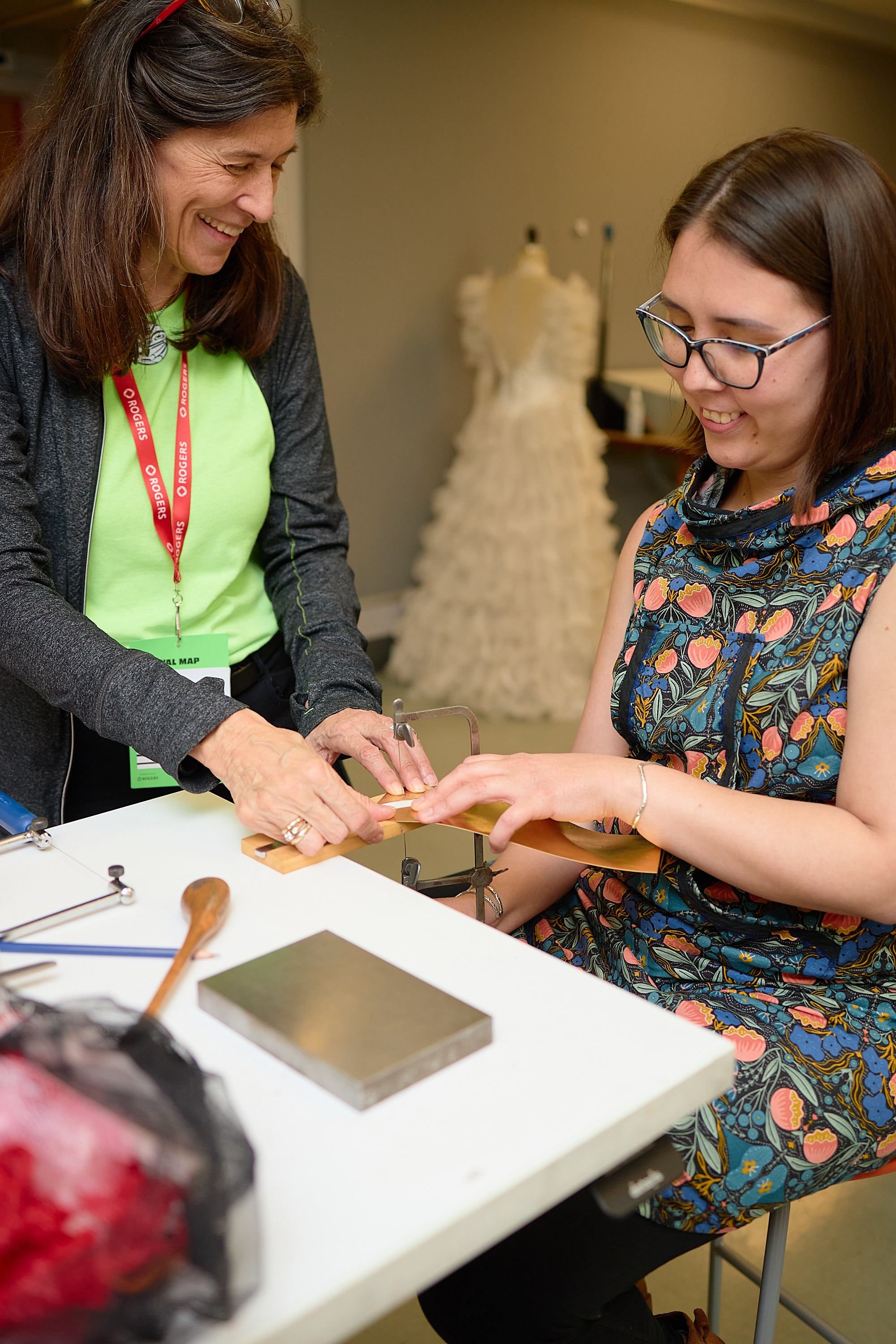
“Toronto has the Fashion Incubator. We do workshops. But many of our people live in their home communities. It’s not always accessible,” she said. “I think it’s important that these initiatives come from the communities themselves. Like what the First Peoples Fund is doing with their art studios. Or that new film studio in Nunavut. That kind of access to tools changes what’s possible.”
She pointed out that this kind of infrastructure also sends a message: “Don’t just come to our land for the landscape. If you’re filming here, use our studios. Work with us.” It felt like a clear vision — Indigenous-made spaces, built on Indigenous land, in service of Indigenous stories.
We moved into a conversation about two-spirit and trans inclusion in fashion. I shared how many queer designers and models have told me they feel safest at Indigenous-run events. She nodded.
“That’s just how our cultures are. We accept our community. There are roles and responsibilities, but not in a binary way. I think there’s a lot more protection in our spaces. Most of the folks we work with are women, femmes, or two-spirit,” she said. “There’s integrity in how we do things. Not just diversity for a brochure.”
Sage also highlighted a few designers she’s especially inspired by: Jamie Okuma, known for her immaculate Indigenous couture and her newly CFDA– approved ready– to– wear that combines tradition with ultra sleek modernity; Michel Dumont, who upcycles with flair and brings a drag sensibility into fashion; and Caroline Monnet, whose sculptural, futuristic pieces sit as comfortably in galleries as on runways. “Jontay [Kahm] is another one to watch,” she added. “Very avant-garde. Very bold. I’d love to get him to Canada.”(Editor’s note: A dress by Jontay Kahm is currently on display in Taking Shape, on now at the Textile Museum of Canada.)
I asked her what she’s been reading, or where she looks for deeper thought around fashion. She recommended Empire of Cotton, a deep dive into the colonial violence that underpins the global textile industry. She also pointed to IFA’s own panel series, Fashioning Resurgence, co-published with Toronto Metropolitan University, which features Indigenous voices in conversation about fashion on our own terms (Those panels were featured in a special issue of TMU’s Fashion Studies Journal, Fashioning Resurgence, and can be viewed online here.)
As we wrapped up, I asked her a final question. In an industry that still struggles with accountability, what does she think about second chances?
“I believe in them,” she said. “But only when people actually change. If there’s no shift in behavior, then what are we doing? Mistakes happen. But it’s about how you move forward. How you take responsibility. How you show up differently next time.”
That groundedness is exactly why Sage Paul matters. She’s not just building fashion shows. She’s building systems. She’s making space. And she’s doing it all in a way that holds integrity, community, and care at the centre.
Follow Sage Paul and Indigenous Fashion Arts: @sagepaul , @indigenousfashionarts
The Textile Museum of Canada and Feather Miigwans would like to thank the Canada Council for the Arts for generously supporting this project.

Related Articles
Sovereignty StyleWalking the Runway Between Worlds: A Conversation with Christian Allaire
Sovereignty Style is a series highlighting Indigenous artists and designers using fashion to express themselves, their cultures, and their stories on their own terms. Curated by transdiciplinary artist and curator…

Sovereignty Style11 Questions with Jason Baerg
Sovereignty Style is a series highlighting Indigenous artists and designers using fashion to express themselves, their cultures, and their stories on their own terms. Curated by transdiciplinary artist and curator…

Sovereignty StylePlanting the Seeds of Indigenous Fashion: In conversation with Amber-Dawn Bear Robe and Dr. Lara Evans
Sovereignty Style is a series highlighting Indigenous artists and designers using fashion to express themselves, their cultures, and their stories on their own terms. Curated by transdiciplinary artist and curator…