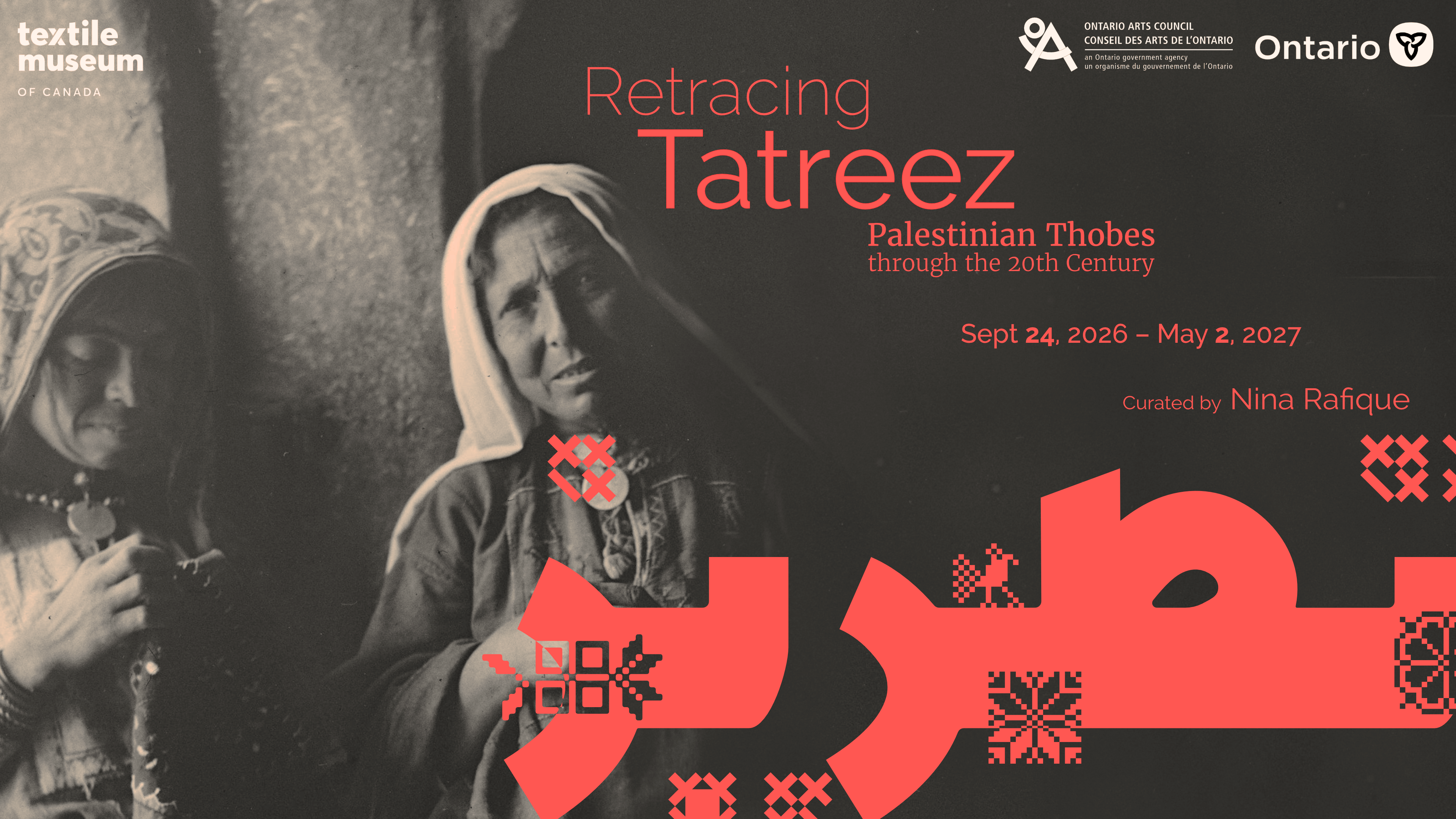
Retracing Tatreez: Palestinian Thobes through the 20th Century
Featuring several examples of Palestinian tatreez (embroidery) from the Textile Museum's collection – most of which will be exhibited for the first time – Retracing Tatreez highlights what these belongings can tell us about the relationship between Palestinians and their homelands in the 20th century and beyond.
Traditionally passed down from mother to daughter, Palestinian tatreez is a historic embroidery practice rooted in the flora, fauna, and everyday landscape of Palestinian life. Women in the towns and villages of historic Palestine stitched their stories into vibrant thobes and jellayeh (dresses and coats), developing unique regional motifs, colours, and styles that reflected ways of life in their homelands. Through tatreez, a woman’s hometown, family, and relationship to the land around her could all be communicated in the practiced language of her stitches.
The Museum’s collection of 20th century tatreez was acquired after the Nakba (Arabic for “catastrophe”), which refers to the mass displacement of approximately 750,000 Palestinians from their ancestral homes during the establishment of the state of Israel in 1948. Like many Western collections of Palestinian dress, the thobes and embroidery fragments in this exhibition were acquired by non-Palestinians long after being looted, left behind, or separated from their original owners.
In this exhibition, curator Nina Rafique showcases these pieces with restored historical context and invites visitors to re-engage with their ways of storytelling. In doing so, Retracing Tatreez highlights what these embroideries can tell us about the unique regional connections between Palestinians and their homelands, as well as the journeys of these objects from the hands of their original creators to today.
Nina Rafique is an emerging textile artist, curator, and researcher living in Toronto, with roots in Palestine and Pakistan. Retracing Tatreez, her debut exhibition at the Textile Museum of Canada, stems from eight months of research on the Museum’s collection of Palestinian and Syrian embroideries. She is inspired by and indebted to the original makers of these pieces, and hopes to raise appreciation for their work by making it more widely accessible.
Become a Member of the Textile Museum Today
And enjoy unlimited free entry to all the Textile Museum's exhibitions, plus much more.
Join Today