Introduction to Binakol – Weave Your Way
Wednesday, November 11, 2026 | 1-4 PM
$85 | General
$75 | Textile Museum Members
Step into the world of optical illusion and heritage through one of Northern Luzon’s most iconic weaves—Binakol.
Known for its mesmerizing spirals and protective symbolism, Binakol was traditionally woven to confuse evil spirits and protect the wearer.
In this workshop, participants will learn the history and cultural significance of the Binakol weave, especially the “kusikus” pattern. The session includes a guided, hands-on activity using a small frame loom to recreate this intricate design in a simplified form.
Open to all levels—no prior weaving experience needed. All materials are provided.
Tickets include light refreshments such as a drink and a snack.
Please inform us regarding your dietary restrictions and allergies by emailing canada@hiblaphilippines.com
For accessibility support, please email Isabelle Sain (isain@textilemuseum.ca)
What to expect in the Binakol weaving workshop:
- Materials provided (including weaving frame loom for rental)
- Weaving pattern guide to take home
- Lecture about the traditional looms and handwoven textiles from different regions of the Philippines
- Live demonstration and hands-on learning of the Binakol textile
- Opportunity to learn the innovative ways how Binakol textiles are used today through modern and contemporary designs.
- Opportunity to explore and learn the context on what specific rituals are attributed to the textile in relation to the community.
- A safe space to explore your own culture and local textiles and their origins
- Active participation and debrief within the workshop facilitation
- Certificate of completion given in the end (physical copies provided and PDF copies are emailed in 2-5 business days after the workshop. Only upon request)
This workshop is in run by Hibla PH Canada In partnership with Philippine Consulate General – Toronto and Textile Museum of Canada
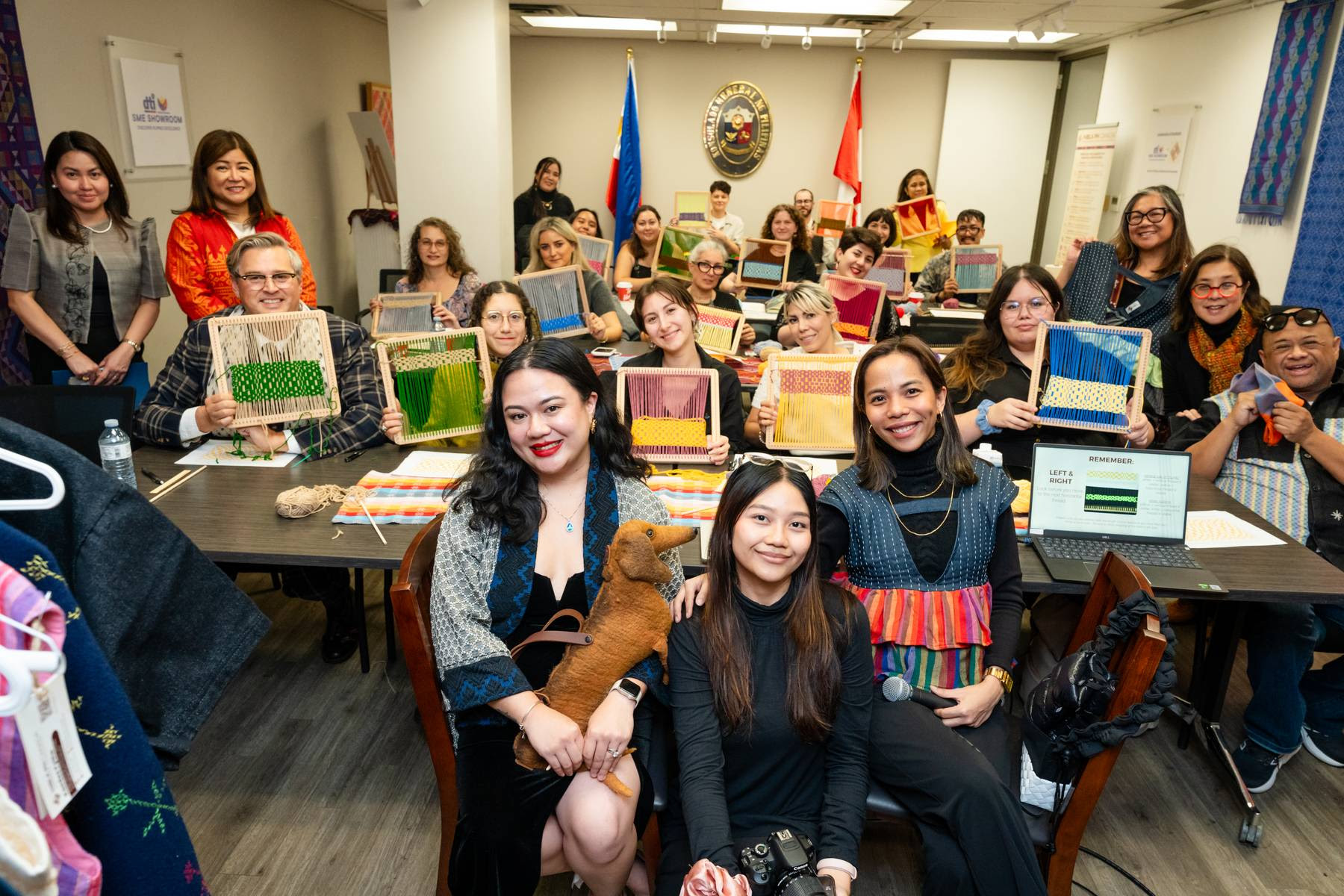
Facilitator Bio:
Romae Chanice “Nice” Marquez is the founder of Hibla Philippines, a social enterprise dedicated to preserving and promoting Filipino textile traditions.
She graduated BA Mass Communication from the University of the Philippines (UP) Cum Laude. In her college years, she was active in school organizations including serving as United Students Organization (UNISO) Chairperson. She also served as chairperson in Save Our Schools Network, a group of child-focused NGOs, church-based groups and other stakeholders advocating for children’s right to education.
Nice is a cultural advocate at heart, deeply passionate about bridging the gap between traditional craftsmanship and modern design. She sees Hibla as a platform to create opportunities for local artisans and to celebrate Philippine culture on a global stage.
In addition to running Hibla, Nice is pursuing her Master’s in Anthropology at UP Diliman, further deepening her understanding of Filipino heritage and cultural narratives.
She plans to proceed with her Doctor of Philosophy (PhD) in Anthropology, and will focus her research on women-led social enterprises and weavers’ livelihood, culture, and artistry.
She also teaches basic and Binakol weaving skills through the class, Weave Your Way. This hands-on cultural experience offers participants a chance to connect with the intricate art of Philippine weaving, fostering appreciation for the craftsmanship and the rich stories woven into each textile.
Under her leadership, Hibla Philippines is currently developing a garment-customization platform with DOST-Philippine Council for Industry, Energy and Emerging Technology Research and Development (DOST-PCIEERD) and DOST-Philippine Textile Research Institute (DOST-PTRI).
About HIBLA
Hibla Philippines is a women-led social enterprise dedicated to preserving the rich heritage of Filipino textiles and empowering local weaving and sewing communities. Founded on the principles of sustainability and cultural pride, Hibla collaborates with 14 communities of weavers, embroiderers, the Sto. Kristo Kusturera Producers Cooperative, which comprises over 90 seamstresses in Quezon City, Philippines, and a community Abaca Farmers from Catanduanes, Philippines.

Become a Member of the Textile Museum Today
And enjoy unlimited free entry to all the Textile Museum's exhibitions, plus much more.
Join Today